
5 WWII Publications About The WACs
While researching WWII military service for an upcoming project, I make it a point to investigate wartime publications. Wartime publications offer a contemporary view of subjects and can be essential for understanding the context of the time in which people lived.
In keeping with blog posts about military members this month, here are five wartime publications about the Women’s Army Corps to breathe life into your research. If you have a WAC in your family tree these will be of interest. If you just want to learn more about WACs, these wartime publications are still worth reading. Either ways, these help us understand the times and the changing opportunities for women to serve their country.
From the WAAC to the WAC
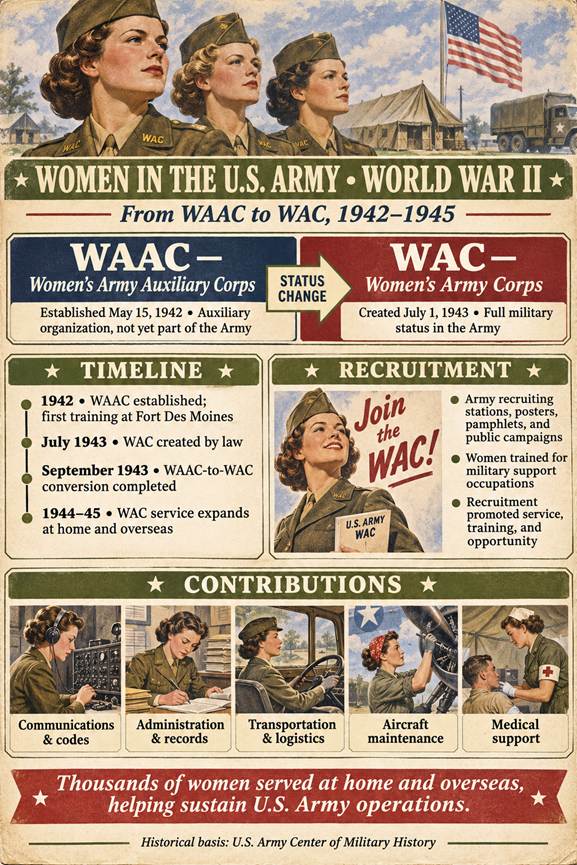
President Franklin D. Roosevelt signed legislation establishing the Women’s Army Auxiliary Corps (WAAC) on 15 May 1942. By recruiting women to perform noncombat duties supporting the United States Army, male soldiers were released to serve at other military assignments. WAACs wore uniforms, were trained by the Army, and worked at military installations, they served with the Army but were not in it. They were legally auxiliaries, which affected their military status, benefits, and protections. Roosevelt signed legislation on 1 July 1943, to create the Women’s Army Corps (WAC) as a component of the Army. Existing WAACs did not automatically become WAC soldiers; they had to transfer through a conversion process. 75% of the WAACs did convert to WACs. During World War II, women served in hundreds of occupations, including administration, communications, intelligence, transportation, medical support, and aircraft maintenance, both in the United States and overseas. The WACs remained a separate Army corps until 1978, when its personnel were integrated into other Army branches.
It is a trip back in time to imagine the women who read these publications, and then decided to serve during the war.
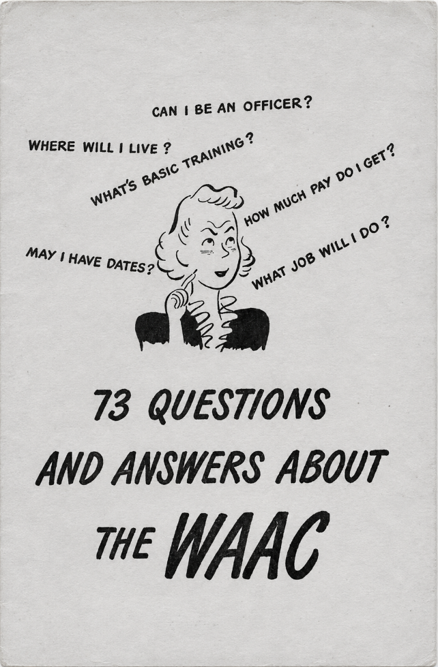
73 Questions and Answers About The WAAC
What would they wear? Would they have dates? Could they wear makeup? Although this publication is about the WAACs, it walked its readers through the aspects of military life that WACs would also experience. With the only requirement being two years of high school or business school, a woman could be trained for a variety of noncombatant jobs and have an equal chance to become an officer. t is hosted on the Illinois Digital Archives at https://www.idaillinois.org/digital/collection/isl3/id/15041
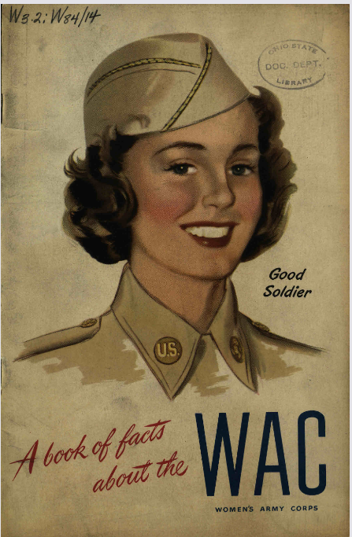
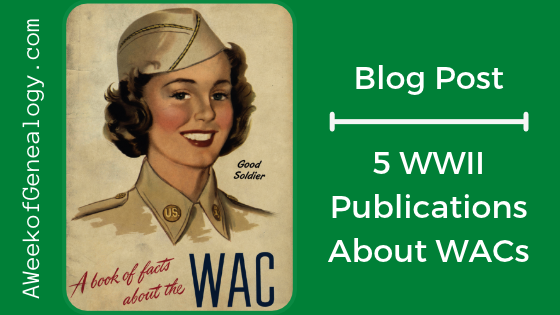
A book of facts about the WAC Women’s Army Corps
Are you curious about what duties WACs performed. where they served, and what they wore? If so, then this pamphlet will be of interest. It describes the roles in which WACs were assigned, accompanied by a plethora of photographs. One page of the book contains a detailed list of jobs for which women might already possess the necessary skills and experience. The uniforms they might wear, their potential locations, and the application process are also included. It is hosted on the Ohio Memory website from the Ohio History Connection and the State Library of Ohio at https://ohiomemory.org/digital/api/collection/p15005coll2/id/818/page/0/inline/p15005coll2_818_0
The next two publications have the same name and cover, while the purpose and information is similar, it is presented differently. It would be great to find a photographic image of a WAC you were researching within their pages.
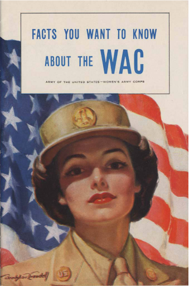
Facts You Want to Know About the WAC
What did WACs do? Where were they stationed? What did the uniforms look like? In its pages, the reader meets several WACs. Questions that the women and their parents might have are answered. The requirement for joining and how to apply are at the end. This version was printed on 20 September 1943, and has 24 interior pages and is illustrated with photographic images. It is hosted on the Illinois Digital Archives at https://www.idaillinois.org/digital/collection/isl3/id/12678
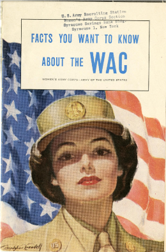
Facts You Want to Know About the WAC
The first three pages are the same as the previous version, with the same message about joining the WACs, signed by Oveta Culp Hobby, Colonel, WAC, Director, on page 1. There are 32 interior pages in this version, printed 31 December 1943. This pamphlet is available at The Portal to Texas History at https://texashistory.unt.edu/ark:/67531/metapth1649991/
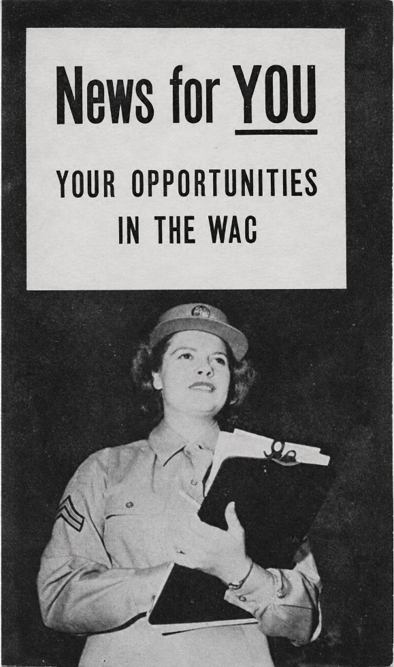
News for You: Your Opportunities in the WAC
This is a brief pamphlet focusing on WACs being able to choose the job they wanted to do, and be trained for the required skills. A WAC might request a first station at one of the nine Service Commands and select which branch of service: Army Air Forces, Army Ground Forces, and Army Service Forces. It was created in 1943. It can be found on Google Books at https://www.google.com/books/edition/News_for_You/rhx1rj0iWbsC
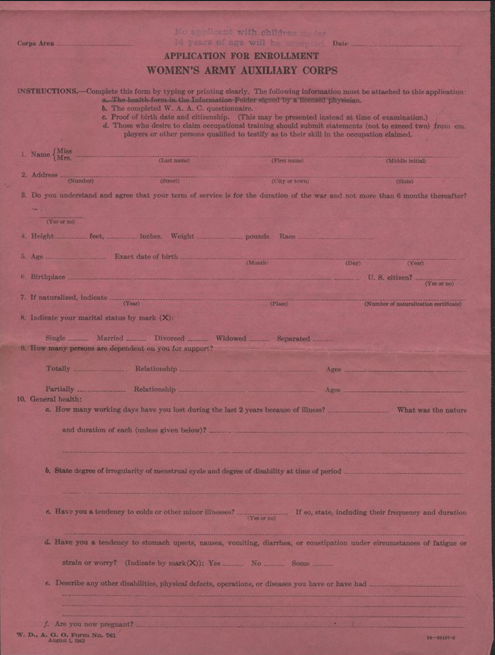
Bonus!
Here is one bonus: an Application For Enrollment in the Women’s Army Auxiliary Corps. If you are researching a WAAC, this is the application they completed. Stamped at the top of page 1 was stamped: “No woman with children under 14 years of age will be accepted.” The whole application can be found at https://www.digitalgreensboro.org/record/83167. This is just one of the items found in the Ruth Shaver Collection in the Betty H. Carter Women Veterans Historical Project at Digital Greensboro. Ruth Agnes Shaver served in the WAACs and the WACs, as a recruiter in Ohio and an intelligence officer in Europe.The finding aid describing the Collection is at https://uncg.as.atlas-sys.com/repositories/2/resources/1428, where you can click on “Go to file” to see the other digitized items.
Let me know how you do!
Learn more:
Guepet, Haley. “The Women’s Army Corps (WAC),” The National WWII Museum, 23 Dec 2024, https://www.nationalww2museum.org/war/articles/womens-army-corps-wac-world-war-ii.
Thompson, Maureen. “Object 56: Life Magazine Story on The WAACs.” U.S. Department of Military Affairs, 28 Mar 2023. https://department.va.gov/history/object-56-waac.