Looking for the 51st Pioneers in the New York State Military Museum

The New York State Military Museum and Veterans Research Center is part of the New York State Division of Military and Naval Affairs (DMNA). It is located in Saratoga Springs, NY.

This blog post takes you on a tour of the Museum’s website. Hopefully will inspire those who have military ancestors from New York to investigate the material that can be found. Remember to look not only for your ancestor, but for information about the places and times that s/he served. Letters from or pictures of contemporaries may shed light on your ancestor’s experiences. (This approach might help you when you search the websites of military museums in other states.)

My particular interest is about the 51st Pioneer Infantry in World War I. The 51st Pioneer Infantry was formed from New York’s State 10th Infantry Regiment.

Since the Museum can only take request via mail, I did send them a letter and a small contribution. In the letter I told them that I was researching my Grandfather and the 51st Pioneer Infantry. I also shared a copy of my Grandfather’s Service Summary Card in case that would help, or prevent them from duplicating work that had already been done. I received information about the 10th in World War I, and the information that the digitized images that I found in their inventory were not yet available on the website.


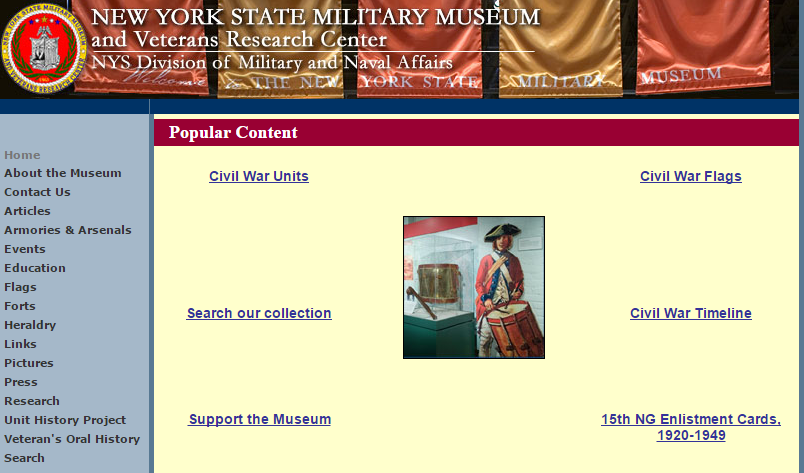
NYDMNA - 01


When you start, learn About the Museum.


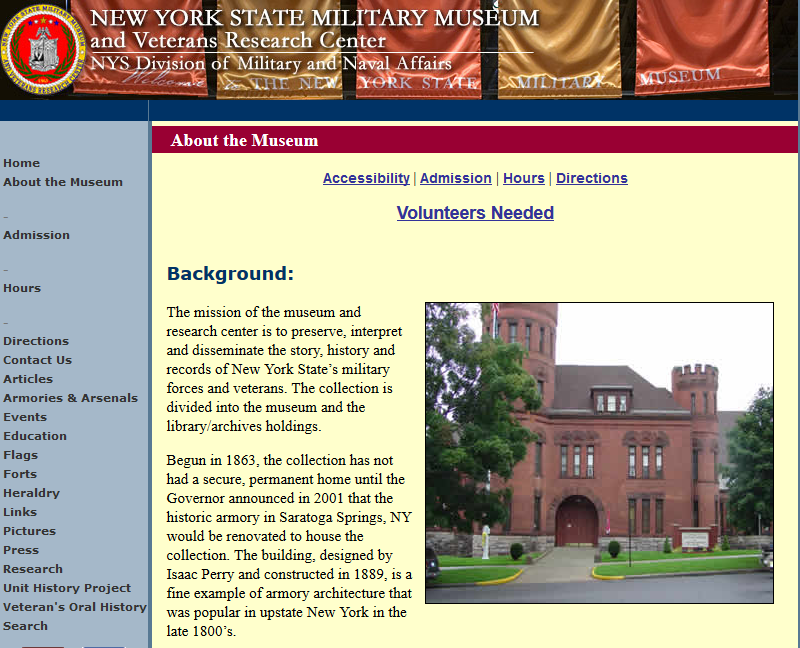
NYDMNA - 02


Here you can learn about the holdings of the museum, as well as its location and hours. Key information is that you have to send your research inquiries by mail, as they do not have the staff to handle telephone requests.

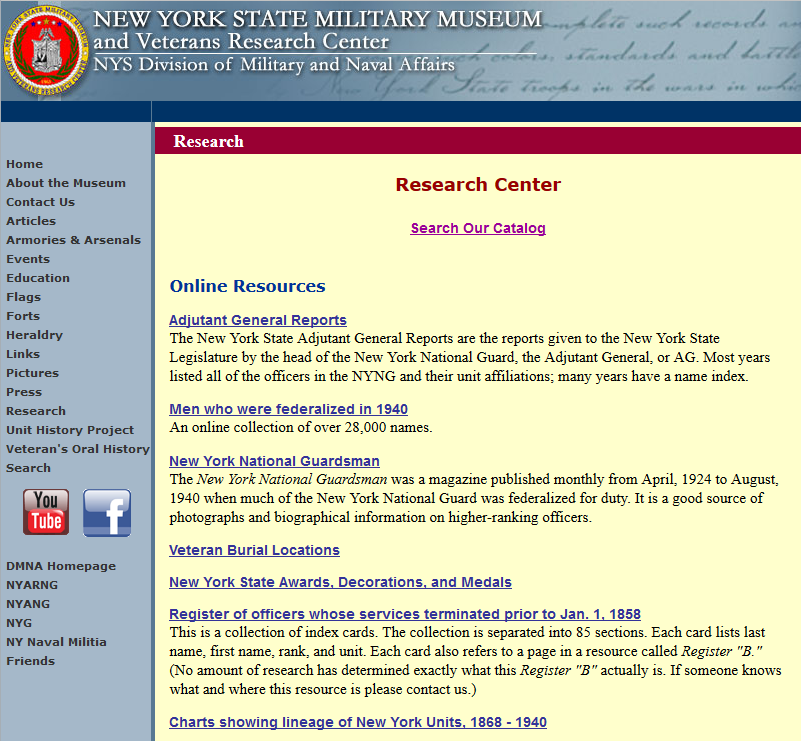
Click on Research to find out what Resources they have online.


NYDMNA - 03


Veteran Burial Locations links to a page with links for Civil War Burial Cards and a link to a the New Horizons Genealogy website’s collection of Revolutionary War Graves of Soldiers Buried in New York. We are warned this list may be incomplete.

Scrolling down there is a link to Digitized Books. Click on it to see which digitized books are available on the Museum website.


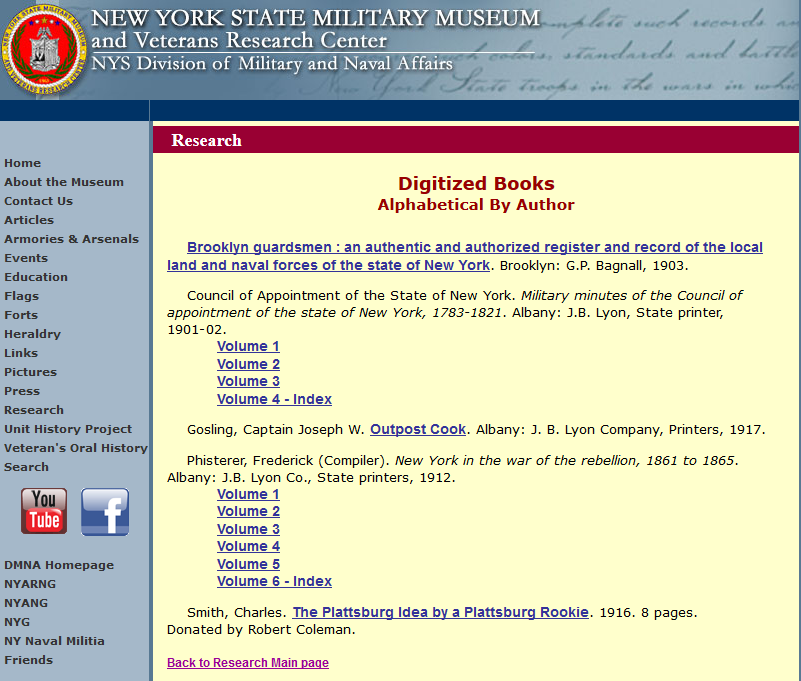
NYDMNA - 04


The Digitized books were worth checking out. “New York in the War of the Rebellion” might be interesting another time.

If you are a New York State veteran, you can select the link for Veteran’s Oral History, where you can learn about how to fill in a questionnaire, learn about the methods to record your history, or find a self-interview packet.

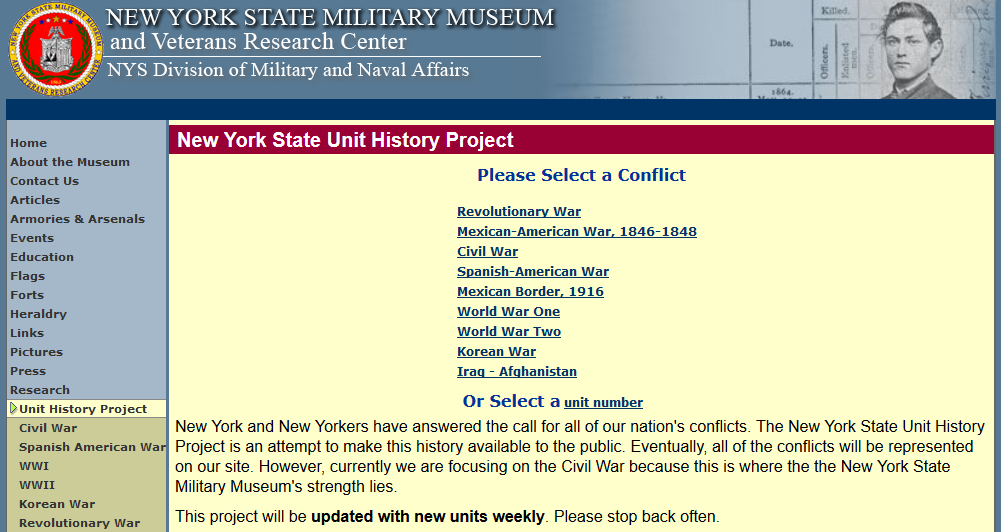
Click on the Unit History Project to view the New York State Unit History Project collecting Unit Histories for major conflicts. The website advertises that it is updated weekly.


NYDMNA - 05


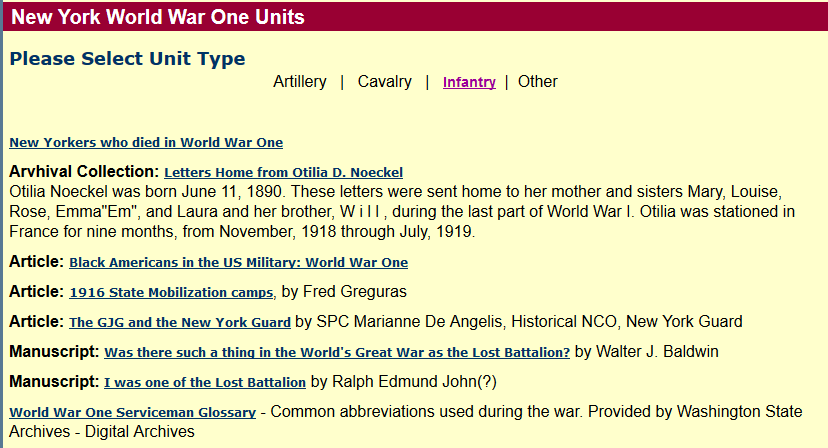
I clicked on World War One, and the current offerings are shown below.


NYDMNA - 05


To search the collections, select Search from the menu on the left side.


NYDMNA - 06


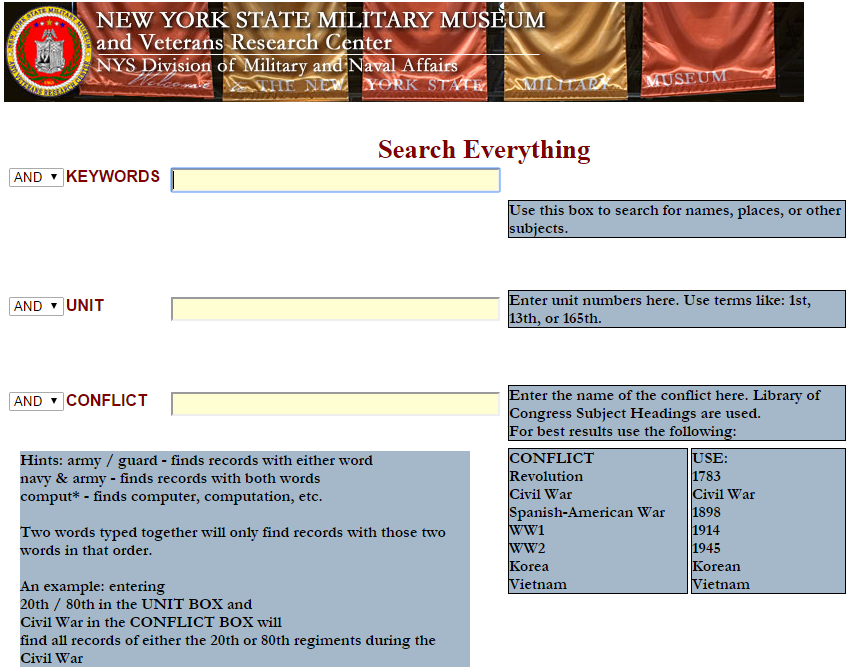
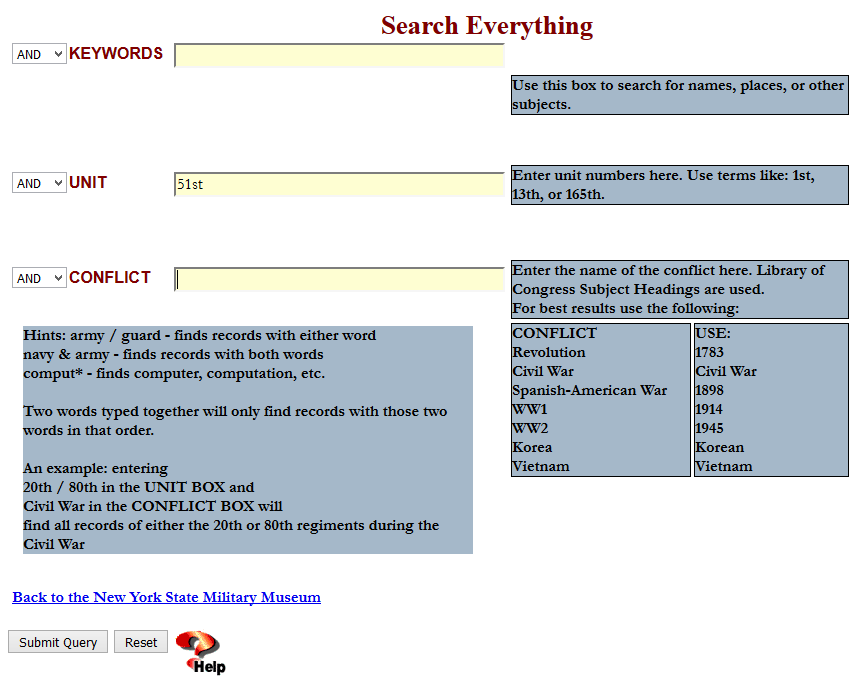
There is a choice of topics to search. To search everything except the roster database, select Search everything.


NYDMNA - 08


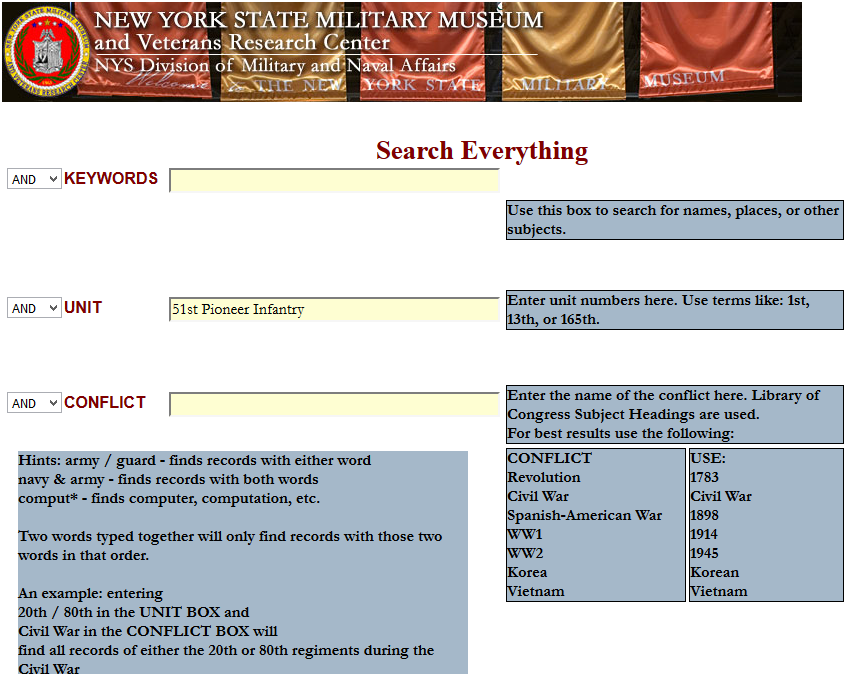
In the unit field, I entered: 51st Pioneer Infantry


NYDMNA - 09


Click on the Submit Query button.

The results were in a book about Armories.


NYDMNA - 11


Searching for Keyword: Joseph McMahon gave no results. (To check I was doing this correctly, I went back and searched for the surname of a soldier who appeared in the search results. It worked.)

Searching for Unit: 51st and Conflict WW1 gave no results.

So, I searched for Unit: 51st

NYDMNA - 12


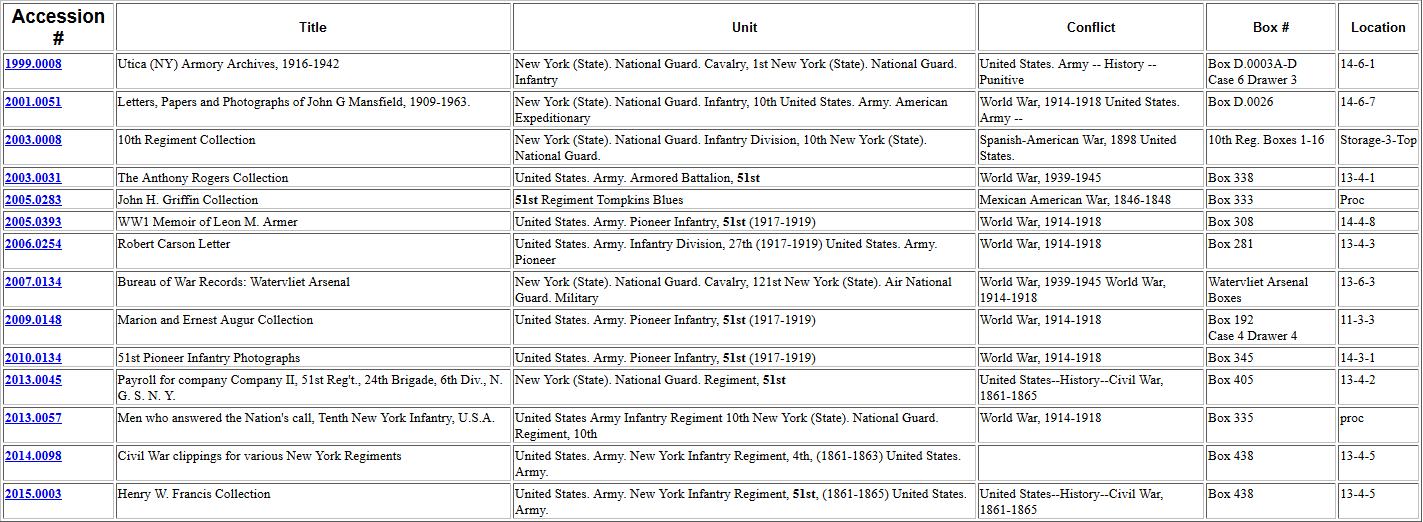
The results included World War, 1914-1918 United States. Army; World War, 1914-1918; and the unit United States. Army. Pioneer Infantry, 51st (1917-1919).

The results also included New York Infantry 51st Regiment in the Civil War.


NYDMNA - 13


A couple of interesting entries were:


NYDMNA - 14


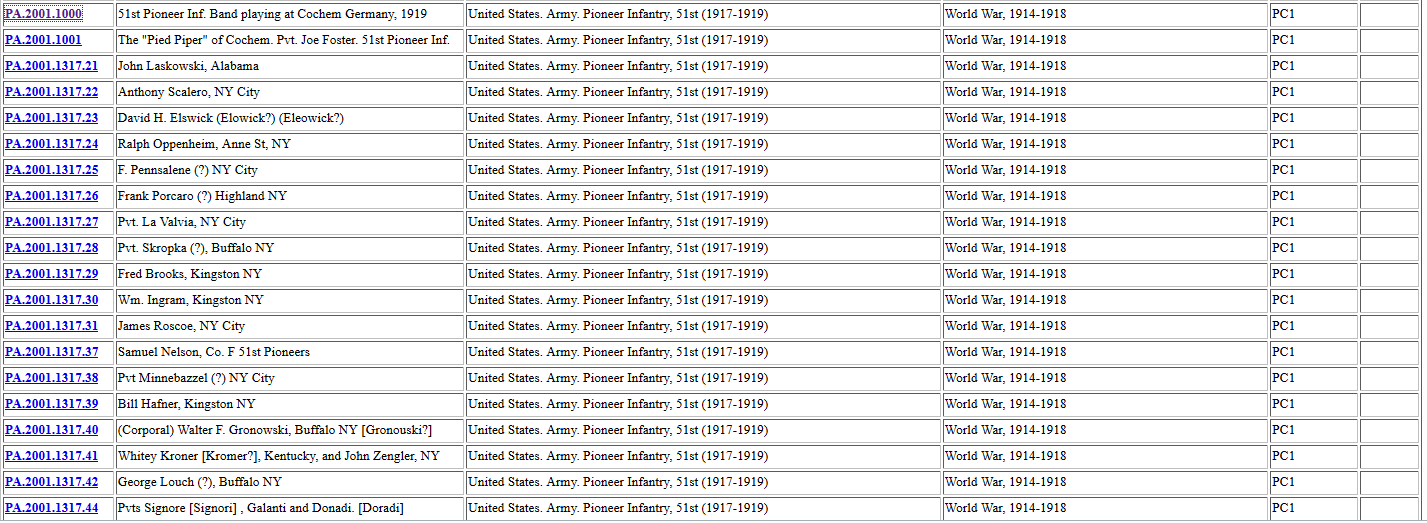
In the Photographs section there were several entries for the 51st Pioneer Infantry.


NYDMNA - 15

NYDMNA - 16


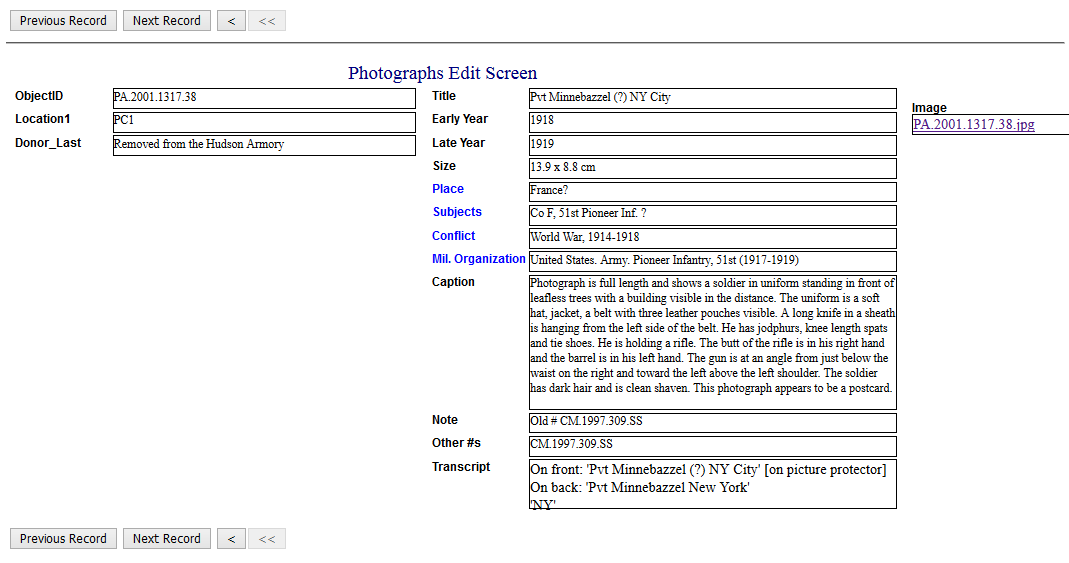
I did click through to the record description, but the links to the pictures were not working. I contacted the Museum and asked about the pictures and was told that they had been scanned, but not loaded onto the web server.


NYDMNA - 17


The individual records contain great information. Remember that you are looking for your ancestor, and also for pictures about the times where and when s/he served.

Good hunting and let me know if your find anything!


51st Pioneer Infantry in the Library of Congress American Memory Collection

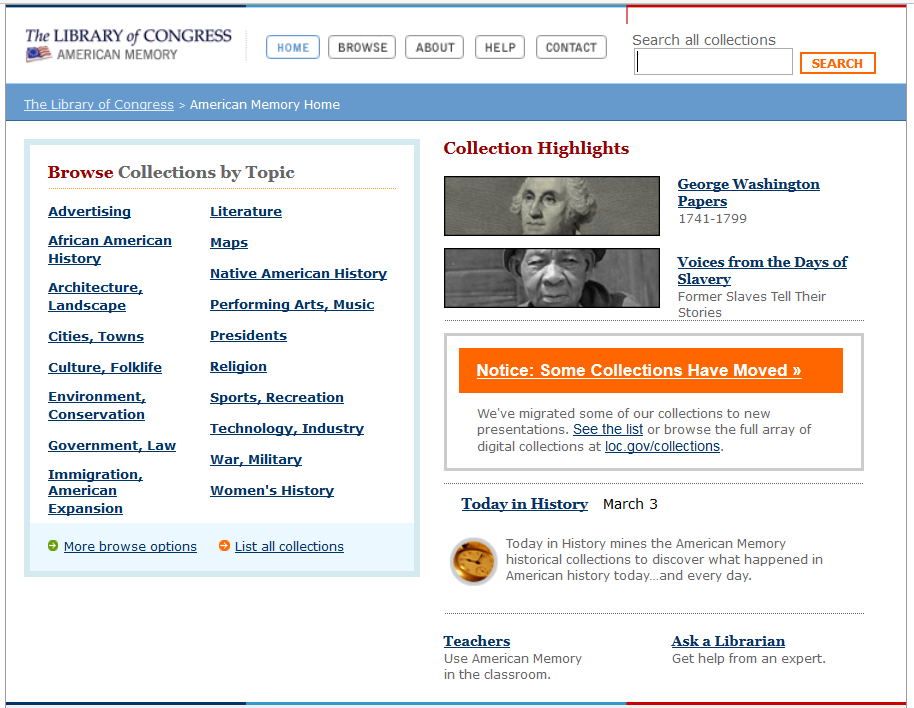
The American Memory Collection documents the American experience. I searched for the 51st Pioneer Infantry in this collection.

image - LOC - 51st Pioneer Infantry - 1

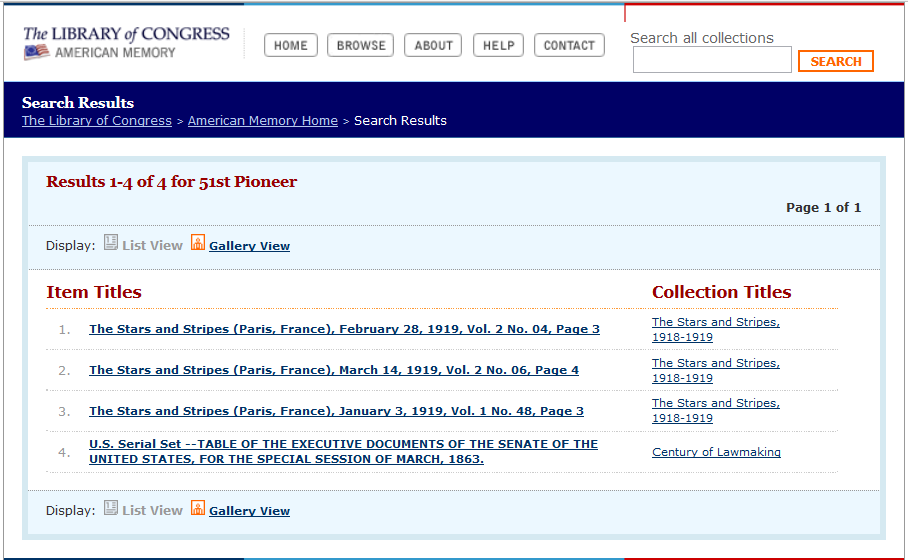
In the search box, I entered “51st Pioneer Infantry” and got only two results. So I tried “51st Pioneer”.

image - LOC - 51st Pioneer Infantry - 2

The results were:

image - LOC - 51st Pioneer Infantry - 3

There is a choice to download the pdf of the page or of the whole issue.

Be sure to note the page number and position of the article; searching in the pdf may not work.

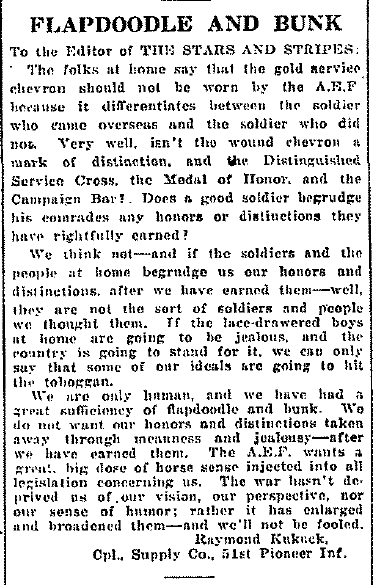
The first result in “The Stars and Stripes” was:

image - LOC - 51st Pioneer Infantry - 6

image - LOC - 51st Pioneer Infantry - 11

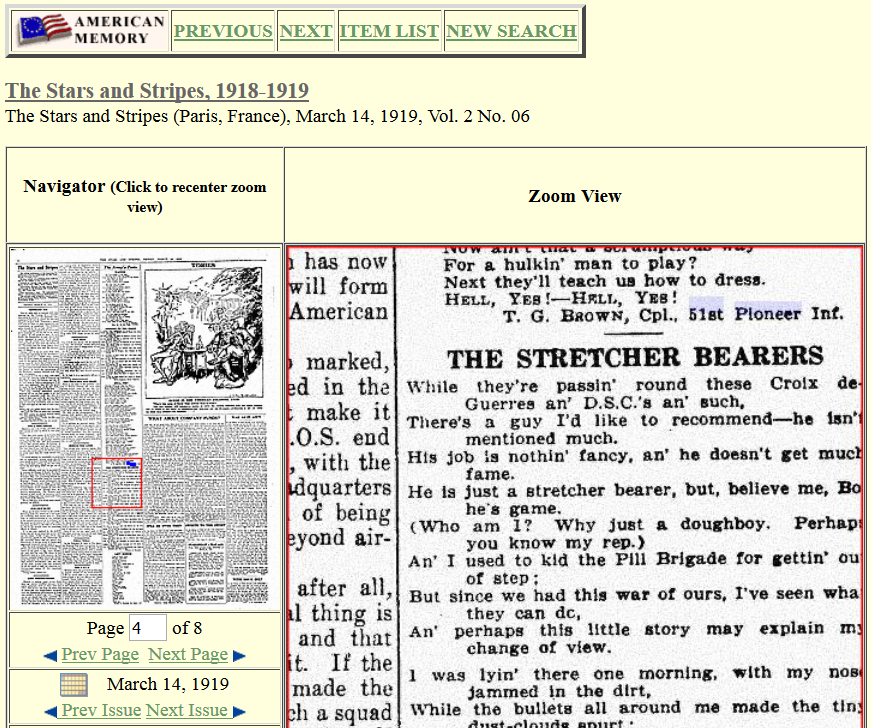
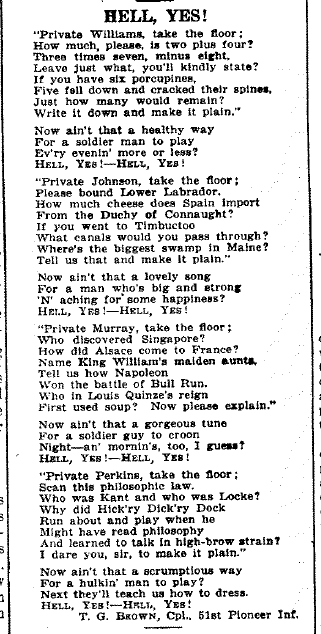
The second result in “The Stars and Stripes” was from the The Army’s Poets column:image - LOC - 51st Pioneer Infantry - 6b

image - LOC - 51st Pioneer Infantry - 12

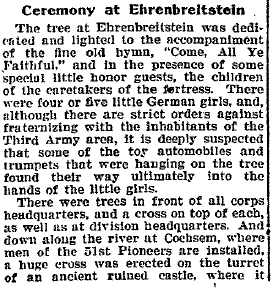
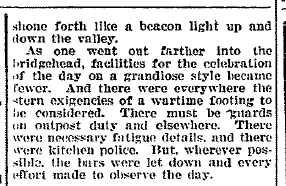
The third result in “The Stars and Stripes” was:

image - LOC - 51st Pioneer Infantry - 6

image - LOC - 51st Pioneer Infantry - 7image - LOC - 51st Pioneer Infantry - 8

The fourth result was in the Serial Set. It was dated 1863, so it was not relevant.

To take this another step, you can search within the “Stars and Stripes” collection for the terms: 51st Pioneer Infantry. There are other results, but the terms were not adjacent.

Search the American Memory Collection for your ancestors’ military units, and see what you can find. Remember to search for other information about their lives and times in this collection.

The St. Mihiel Offensive and the 51st Pioneer Infantry

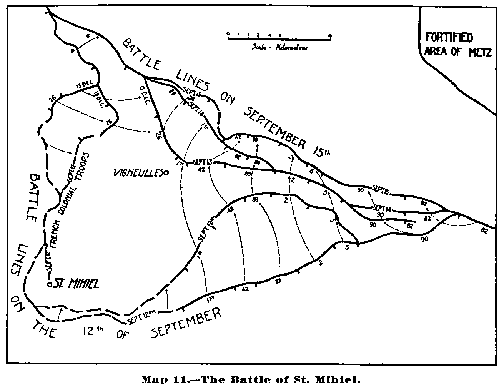
General Pershing’s American Expeditionary Force (AEF)  launched the Saint-Mihiel offensive. This was the AEF’s first independent offensive, with an American Army under American command. The goal was to cut off the rail lines between Paris and the Eastern Front. The St. Mihiel salient was a fortified bulge into France that was 15 miles on either side of St. Mihiel, 20 miles south of Verdun.

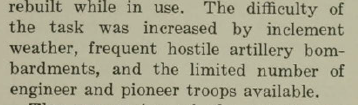
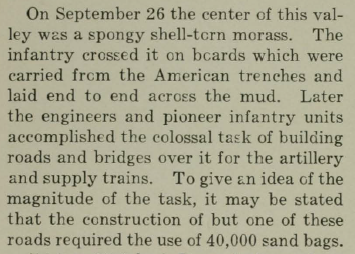
The 51st Pioneer Infantry was divided. My Grandfather’s Company, B, was attached to First Division. They had their first experience with exploding shells, and enemy machine guns and airplanes dropping bombs. The Pioneers kept roads and bridges repaired and rebuilt. They were tasked with keeping the lines of communication open. Trucks were filled with broken brick and stone from destroyed cities and villages, and were prepositioned where enemy attacks were expected. As soon as a shell exploded in a road, the crew came and repaired it.

battle of st mihiel - battle linesThe map above is from “The War with Germany A Statistical Summary” by Leonard P. Ayres, Colonel, General Staff, Washington Government Printing Office, 1919.

St. Mihiel by the Numbers

  • 1st Time American Expeditionary Forces were under American Command
  • 1st Use of the term D-Day
  • 7 American Divisions Advanced at 5 A.M. on 12 Sept 1918
  • 1 million artillery shells were fired in the first 4 hours
  • 1476 allied air planes participated in the greatest air battle of the Great War
  • 16,000 Prisoners were taken in two days

5 Web Resources:

  1. St. Mihiel Drive 1918 United States Army, World War I from the Official films of the Signal Corps of the U.S. Army taken in France. Note: This video does contain images of fallen soldiers.
  2. Pershing’s Description of the Battle of Saint Mihiel [Excerpted from the Final Report of Gen. John J. Pershing (Washington, D.C.: Government Printing Office, 1919), pp. 38-43 ]
  3. American Expeditionary Force at St. Mihiel
  4. The Library of Congress American Memories, Today in History: September 12 Saint-Mihiel Offensive
  5. “The War with Germany A Statistical Summary” by Leonard P. Ayres, Colonel, General Staff, Washington Government Printing Office, 1919, Chapter VIII. Two Hundred Days of Battle.

Sending A Spouse to Rootstech

What if you can’t make it to Rootstech? What if your spouse is in Salt Lake City on business that week? Send the spouse!

OLYMPUS DIGITAL CAMERA

I put together a binder for him to bring. It included:rootstech - findmypast -IMG_0280

  • His electronic receipt for the keynote / vendor hall ticket
  • A list of the vendors, with notes about which ones to visit
  • His pedigree chart
  • His line of descendancy from Mayflower passenger Stephen Hopkins

rootstech - famlysearch -IMG_0281My guidance for him was to check out the new products, take pictures and check out the product offerings and special sales.

While he walked around the vendor hall, he sent pictures. He also called to see if I needed the items on sale, or needed more information. The calls and pictures really were the next best thing to being there.

He followed those instructions, and collected a bag crammrootstech - NYGBS -IMG_0283ed full of information, bags and items given away at the vendor tables. He clearly enjoyed his time in the vendor hall.

Perhaps he was inspired by the beautiful family charts when he bought a printer capable of printing 12″ x 12″ sheets.  He mentioned that it would be good for printing fanrootstech - worlds largest -IMG_0286 charts and other family history. Is it possible he is hooked?

5 Questions with the DC Metro Rootsmagic User Group Leader, Dr. Margaret Ezell

Recently I asked Dr. Ezell to answer a few questions about her favorite genealogy software program, Rootsmagic.


1. Why should a genealogist use a genealogy software program?

My biggest reasons for using a genealogy software program are:

  • Good software programs like RootsMagic make it easy to share information. Some also have iPad, or Smartphone versions.
  • The mistakes in my database are my own, and all changes are mine.
  • I decide when something is proven, when I have enough sources, and who is related to whom.

There are two types of genealogy/family history programs, those that run in the cloud and those that run on your home computer. Example programs on the Cloud are Ancestry, FindMyPast, and MyHeritage. They are easy to share with others. Example software program that run on your computer (PC or MAC) are RootsMagic, Legacy, Family Tree Heritage, Family Tree.

When I use collaborative online family trees, such as Family Search, other users can change the entries. Example: My great grandfather’s name was James Reeves Watson, the Clerk of Court in Claiborne Parish, LA. Every document we have has his full name. One of my unknown relatives decided to wipe out his full name and put in just JR Watson. I had to go back into FamilySearch and put in his full name, documented. He could have had a nickname of JR, but my mother at 99 had never heard her grandfather called that. She had been very close to him.

The same thing happens when you use any of the online program and you don’t make your file PRIVATE! But you don’t want to make it private so you can find new relatives and researchers. That is the oxymoron for researchers! So have your own copy offline!


2. What genealogy software programs have you used?

RootsMagic (several versions including the latest: RootsMagic 7). It works with Windows 10, 8, 7, 2000, and Mac OS X

Broderbund Family Tree Maker

Legacy

PAF (Personal Ancestral File), which is no longer supported by FamilySearch as of JULY 15, 2013.


3. Why do you recommend using RootsMagic?

It works/synchs/searches/imports directly with FamilySearch and soon it will with Ancestry.

Later this year, RootsMagic users will have access to Ancestry’s huge collections of records and members’ trees. With this new association, comes the ability to use the hints (Shaky Leaves). This will be in addition to the Hints from FamilySearch and MyHeritage.

Ezell - Rootsmagic - 1


4. Is there a great feature of RootsMagic that people should be using and don’t?

There are several that I love besides the HINTS:

Color Coding people and lines. You can use the color coding to highlight those who want work on or highlight you problem people for whom you need more documentation.

Ezell - Rootsmagic - 2

Switching Views from Pedigree to Family to Descendants to People, WebSearch, Timeline.

Ezell - Rootsmagic - 3-

Ezell - Rootsmagic - 5


Ezell - Rootsmagic - 6


5. How can participating in a user group help a genealogist?

You can ask your specific questions or ask for a demonstration from other members. A current example topic is: Help for moving data from Family Tree Maker to RootsMagic.

Each month our RootsMagic User Group tries to have a lesson of some type. Researchers new to RootsMagic 7 may have challenges learning how to enter source citations into RootsMagic, so I thought I would show how I enter a new source and then create a citation, with the Evidence Explained source templates, and with a free-form template (in a later post in this series).This past month we were going through lesson on Creating Source Citations in Rootsmagic 7 from Randy Seaver’s Blog at Genea-Musings. You can view these blog posts here.


About the Metro DC Rootsmagic User Group

The Metro DC RootsMagic User Group meets at Washington DC Family History the 2nd Saturday of each month at 9:30 a.m. except when major Genealogy Conference are the same weekend. Everyone is invited to attend.  After the RootsMagic / Ancestry announcement there have been a lot of new users, so we have gone back to a lot of the basics at the meetings.  We have a free-for-all question session after the lesson.


Margaret P. Ezell, Ph.D.


As far back as Margaret Ezell can remember, she was taken to research libraries, courthouses, and to visit family members to gather family history information. Margaret’s mother, Mildred Ezell – (who died in 2015 at 99 yrs. and 10 days) became a genealogy enthusiast more than 63 years ago. Margaret remembers at about age 9, going to courthouses in Georgia and South Carolina. “There was one bare 40-watt bulb dangling from the ceiling, damp walls, boxes of stinky old records, and bug parts in the basement room where Mom copied records (no Xerox machines then). We took our own lightbulb -100-watt. Mom had me copy records until lunchtime when the movie matinee opened and I ran like the wind to get out of the courthouse.”

Having stood with her Mother for 3 days at the copier straight at the University of North Carolina Chapel Hill Wilson Library Manuscript Room, she is now glad to have so many digitized online records. Her computer skills were used to train her Mom to use the computer at 70 years of age. She wrote more than 15 genealogy books that Margaret edited, formatted and prepared the text and photos for camera-ready copy for publishing. The books are all on her family – mainly southern roots – Corry, Brodnax, Watson, Cain, Seab, Swint. She and her Mom submitted over seven (7) thousand records to the FamilySearch.

Margaret has a Ph.D. from Michigan State University in Family Finance and has worked in the financial and information technology arenas for over 15 years. Margaret is a Seneca Stake Family History Consultant and one of the founders of the DC Metro RootsMagic User Group which meets the 2nd Saturday of every month at the DC Family History Cente