
WWII A Pocket Guide to…
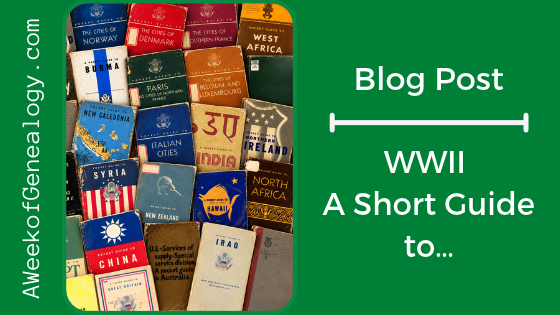
NOTE: Historical Content Advisory: The World War II publications discussed in this blog post reflect the language, attitudes, cultural assumptions, and stereotypes of the era in which they were written. Some descriptions of nationalities, ethnic groups, religions, and local customs may be considered inaccurate, offensive, or inappropriate by today’s standards. These materials discussed and linked to are presented in their original historical context for educational and research purposes. Their inclusion does not constitute an endorsement of the views expressed, nor should the guides should be evaluated as evidence of contemporary American military perspectives. Rather, they provide valuable insight into how the U.S. military portrayed other countries and cultures to American service members during World War II.
If you enjoy reading materials from WWII, you may find these short books especially rewarding. They offer a glimpse into how these places were described and understood at the time. If you are researching a soldier who was stationed in a location featured in one of these guides, consider that they may have held a copy of the very same book, turned its pages, and used its descriptions to explore unfamiliar surroundings. Reading one today offers a small but tangible connection to the world as they experienced it.
The series titled A Pocket Guide to…(1942-1945) and A Short Guide to…(1942-1944) were small, government-issued booklets prepared during WWII Published by the U.S. War and Navy Departments. These guides were intended to help servicemen understand unfamiliar cultures, communicate with local populations, observe local customs, and represent the United States appropriately overseas. They were written in a conversational, accessible style to introduce American military personnel to the countries where they might be stationed. These two publications are frequently grouped together in library catalogs under the Army Service Forces, Special Service Division.
Rather than being conventional tourist guides or military field manuals, they offered practical travel information, cultural orientation, elementary language instruction, historical background, and guidance on personal behavior. The booklets contained information about a country’s history and geography which included political circumstances. There was information about cultural customs which addressed local traditions, social expectations, etiquette, religion, and behavior that Americans of the time might find unfamiliar. The guides contained brief language help with common expressions, pronunciation guides, and practical vocabulary. Soldiers are challenged to build relationships to help German people join the world’s useful citizens by their behavior.
Although they contain stereotypes there is often interesting advice that addresses respect for the people who are met included in the content. The reader was advised to practice good military conduct by interacting respectfully with civilians, avoiding misunderstandings, and maintaining goodwill.
The Pocket Guide to Germany, published in 1944, begins in a serious tone with its first sentence: “Whether you fight your way in, or march in to occupy Germany under armistice terms, you will be doing a soldier’s job on the soil of the enemy.” It contains material about being vigilant, German propaganda about America and Americans, considerations when marrying a foreign girl, and a larger language guide
Some of the pocket guides are similar to the format of the small American Service Edition (ASE) books. You can read more about them in our blog post What WWII Military Ancestors Were Reading. These were truly touring oriented books for military personnel, with titles such as: Pocket Guide To The Cities Of Belgium And Luxembourg, Pocket Guide To Paris And The Cities Of Northern France, Pocket Guide To The Cities Of Southern France, Pocket Guide To Italian Cities, Pocket Guide To The Cities Of Denmark, and Pocket Guide To The Cities Of Norway. All of these had the same Introduction:
Click to see a transcription
ATTENTION
About the only thing in this booklet that can be guaranteed is the terrain. The rest of it is up to the fortunes or misfortunes of war. Many of the towns and cities described here have been bombed and shelled by us as we approached, and shelled by the enemy as he retreated. And many of them will still show the marks of the destruction visited upon them when these lands were being conquered and occupied by the Germans.
The short historical notes and city plans concerning most of the towns are correct as of the outbreak of the war. But the changes of war were still happening in many places when this pocket guide went to press.
You may find that art treasures described and located in these pages have been looted or destroyed, and it may be years before those that can be restored are sights to see again. On the other hand, some of them, by a stroke of good fortune, may be left intact and you will be able to enjoy them.
At the end of the Introduction to these versions was a statement encouraging service members to see what they could now, rather than pay more money to travel after the war:

Click to see a transcription
Anyhow, so far as your military duties permit, see as much as you can. You’ve got a great chance to do now, major expenses paid, what would cost you a lot of your own money after the war. Take advantage of it.
Quite a few can be located on the internet, with a good selection at the Internet Archive. The link to our Week Of Genealogy list is https://archive.org/details/@awog/lists/5/wwii-a-pocket-guide-to-
The Navy History and Heritage Command hosts Pocket Guide to New Guinea and the Solomons at: https://www.history.navy.mil/research/library/online-reading-room/title-list-alphabetically/p/pocket-guide-new-guinea-solomons.html
Others can be read at HathiTrust, but to download the whole book you need to be affiliated with a member institution.